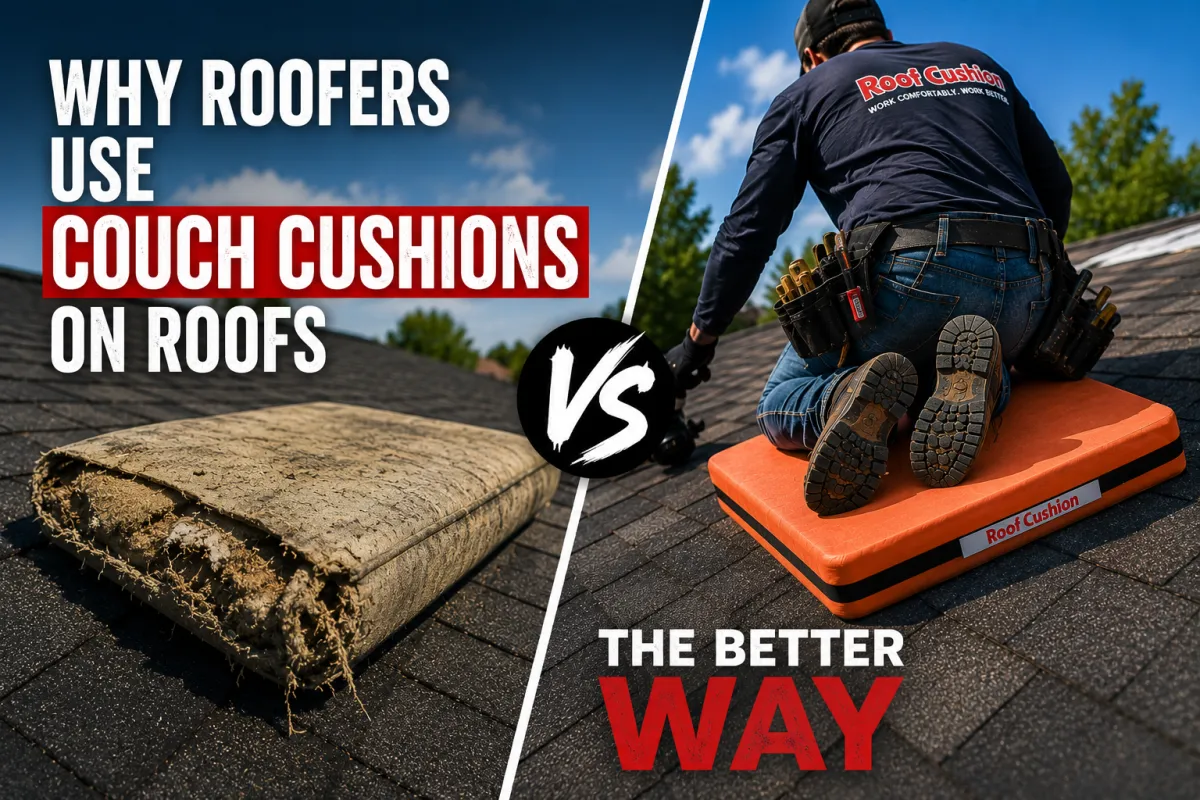
Why Roofers Use Couch Cushions on Roofs (And Why It’s Time for a Better Option)
Why Roofers Use Couch Cushions on Roofs (And Why It’s Time for a Better Option)
Roofers are known for being resourceful.
If something works, lasts long enough, and gets the job done, it tends to stick around in the industry for years. That’s exactly why couch cushions somehow became a standard piece of roofing equipment on jobsites across the country.
Drive past almost any roofing crew and there’s a good chance you’ll spot an old couch cushion sitting on the roof.
It sounds ridiculous to people outside the industry, but roofers know exactly why they’re there.
The real question is:
Why are so many contractors still relying on makeshift cushions instead of products actually designed for roofing work?
Why Roofers Started Using Couch Cushions
Roofing is physically demanding work.
Between steep slopes, hot shingles, long tear-offs, and hours spent kneeling or sitting on rooftops, roofers started improvising ways to make the job more manageable.
Couch cushions became popular because they were:
cheap
easy to find
soft enough for kneeling
lightweight
disposable when worn out
For years, they were simply “good enough.”
Most roofing crews weren’t looking for a professional roofing pad because there really weren’t many products built specifically for rooftop comfort and support.
So crews made do with whatever worked.
And that meant old couch cushions from basements, garages, curbsides, and dumpsters somehow became unofficial roofing equipment.
The Problem With Couch Cushions on Roofs
The issue is that couch cushions were never designed for roofing conditions.
Once you put them on steep shingles under heat, dirt, moisture, and repeated daily use, problems start showing up quickly.
They Wear Out Fast
Most couch cushions break down after repeated exposure to:
heat
moisture
UV rays
roofing granules
nails and debris
The foam compresses unevenly, fabric tears, and the cushion loses consistency over time.
They Look Unprofessional
Homeowners notice everything on a roofing project.
Dragging stained couch cushions onto a customer’s roof doesn’t exactly inspire confidence or professionalism.
For contractors trying to build a premium brand, appearance matters.
They’re Inconsistent
Every couch cushion is different.
Some are too soft.
Some slide around.
Some absorb water.
Some flatten immediately.
There’s no consistency from one job to the next.
They’re Not Built for Roofing Work
Couch cushions were designed for living rooms, not rooftops.
Roofing conditions require materials that can handle:
steep slopes
rooftop heat
repeated transport
daily contractor use
rough jobsite conditions
That’s where professional roofing pads started entering the market.
Why Professional Roofers Are Upgrading to Roofing Pads
The roofing industry has evolved.
Crews today invest in:
better tools
better boots
better dump trailers
better CRM systems
better branding
It only makes sense that roofing accessories would evolve too.
Professional roofing pads are designed specifically for rooftop work instead of being improvised from household furniture.
That means better:
durability
portability
consistency
grip
rooftop performance
professional appearance
More contractors are realizing that purpose-built equipment simply performs better over time.
What Makes a Good Roofing Pad?
Not all roofing pads are the same.
Professional roofers typically look for:
durable foam construction
lightweight portability
rooftop grip and stability
comfort during long jobs
easy transport between projects
materials designed for repeated use
The goal isn’t to replace skill or safety equipment.
The goal is creating a more professional and comfortable rooftop work surface built for real roofing conditions.
Roof Cushion: Built by Roofers
Roof Cushion was created by roofers who understood the limitations of makeshift couch cushions firsthand.
Instead of relying on inconsistent household foam, Roof Cushion products are designed specifically for rooftop work using durable materials built for repeated contractor use.
Whether you’re handling:
inspections
repairs
tear-offs
installations
steep-slope roofing
Roof Cushion products are designed to deliver comfort, portability, durability, and rooftop performance for everyday jobsite conditions.
The Roofing Industry Is Moving Forward
Roofing crews will probably always be known for finding creative ways to get the job done.
But there’s a difference between being resourceful and relying on outdated solutions simply because “that’s how it’s always been done.”
Couch cushions had their era.
Professional roofing pads are the next step forward.
Ready to Upgrade From Couch Cushions?
Explore professional roofing pads designed for real rooftop work.
FAQS
Why do roofers use couch cushions?
Roofers commonly use couch cushions to create a softer and more comfortable surface while working on rooftops during long jobs.
What are the downsides of couch cushions on roofs?
Couch cushions wear out quickly, absorb moisture, look unprofessional, and were never designed for roofing conditions.
What is a professional roofing pad?
A professional roofing pad is a purpose-built rooftop work surface designed for durability, comfort, portability, and repeated contractor use.
Why are roofers switching to roofing pads?
Many roofers are upgrading to professional roofing pads because they offer better durability, consistency, portability, and rooftop performance than makeshift cushions.
Is Roof Cushion a fall protection device?
No. Roof Cushion is a roofing comfort and support accessory and is not OSHA-certified fall protection equipment.