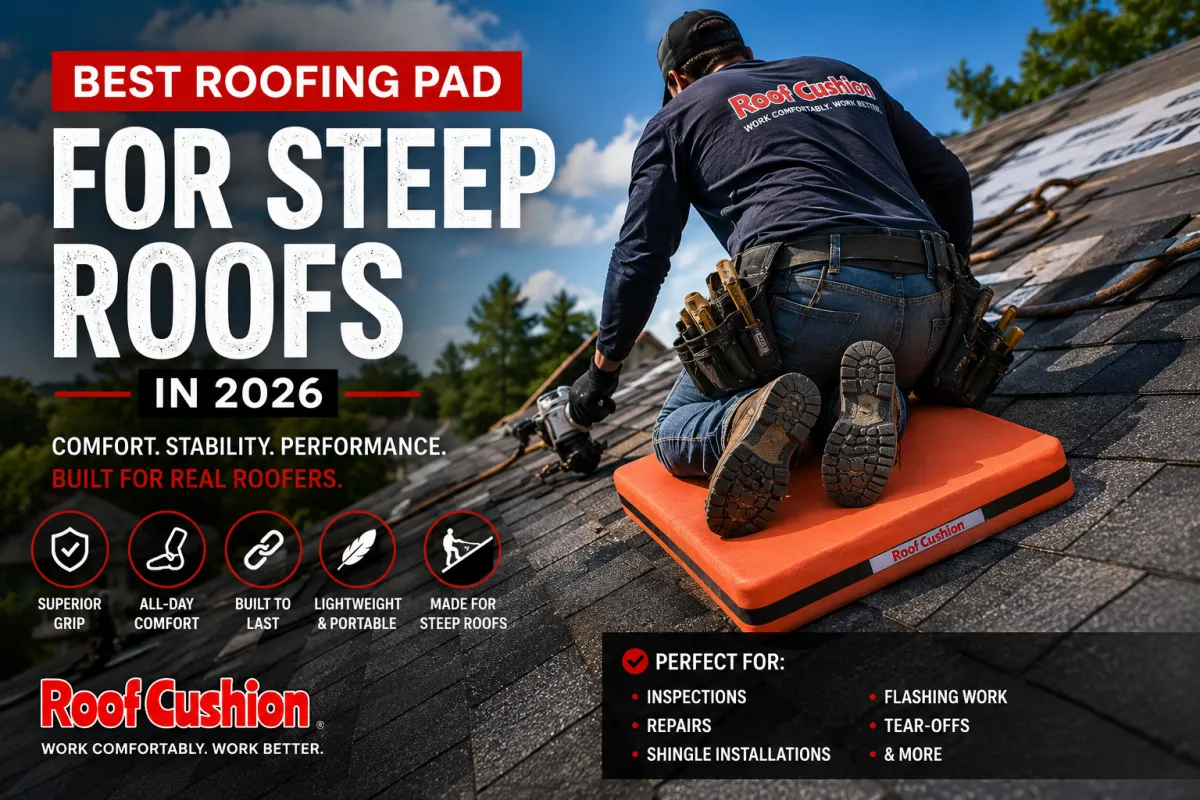
Best Roofing Pad for Steep Roofs in 2026
Best Roofing Pad for Steep Roofs in 2026
Steep roofs separate experienced roofers from everyone else.
They demand better balance, better positioning, better awareness, and better equipment. After enough hours on a steep slope in summer heat, even small discomforts start becoming major distractions.
That’s one reason roofing pads have become increasingly common on jobsites.
Roofers are looking for better ways to create a more comfortable and stable work surface during long roofing projects without relying on old couch cushions or makeshift solutions.
But not all roofing pads are built for steep roof conditions.
If you’re searching for the best roofing pad for steep roofs, here’s what actually matters.
Why Roofers Use Roofing Pads on Steep Roofs
Steep-slope roofing creates constant pressure on the knees, legs, and lower body during:
tear-offs
repairs
installations
inspections
flashing work
detail work
Roofing pads help create a more comfortable workspace while working on angled surfaces for extended periods of time.
For many crews, they’ve become just as normal as:
roofing harnesses
Cougar Paws
magnetic sweepers
chalk lines
dump trailers
The difference is that roofing pads directly affect comfort during nearly every phase of the job.
The Problem With Generic Cushions
For years, roofers relied on old couch cushions because there weren’t many products designed specifically for roofing work.
The problem is that household cushions were never made for:
rooftop heat
shingles
steep pitches
repeated contractor use
jobsite conditions
Over time they:
flatten unevenly
tear apart
absorb moisture
become inconsistent
look unprofessional
That’s why purpose-built roofing pads are becoming more common among professional crews.
What Makes a Good Roofing Pad for Steep Roofs?
The best roofing pads usually focus on five things:
1. Grip & Stability
On steep roofs, movement matters.
A good roofing pad should be designed with rooftop grip and stability in mind to help create a more reliable work surface during everyday roofing tasks.
Roofers want equipment that feels predictable and consistent across different roof types and pitches.
2. Comfort During Long Jobs
A roofing pad should help make long hours on steep slopes more manageable.
Whether you’re handling:
inspections
shingle installs
flashing details
roof repairs
metal roofing work
comfort becomes increasingly important throughout the day.
3. Durability
Roofing destroys weak materials quickly.
Heat, granules, dirt, nails, moisture, and repeated transport between jobsites all take a toll on equipment.
A professional roofing pad should be built for repeated contractor use, not occasional household use.
4. Portability
Roofers already carry enough gear.
The best roofing pads are lightweight enough to move easily around the roof and practical enough to transport between projects without hassle.
5. Professional Appearance
This gets overlooked more than it should.
Homeowners notice:
organization
cleanliness
professionalism
tools
crew appearance
Dragging a ripped couch cushion onto a customer’s roof doesn’t exactly communicate premium workmanship.
Purpose-built roofing pads help crews present themselves more professionally on the jobsite.
Why More Roofers Are Switching to Professional Roofing Pads
Roofing has become more professional across the board.
Modern contractors are investing in:
branded trucks
CRM systems
aerial measurement software
better safety equipment
better sales systems
better tools
Roofing pads are evolving the same way.
Instead of relying on improvised materials, more crews are choosing products built specifically for rooftop performance and repeated daily use.
Roof Cushion: Built for Real Roofing Conditions
Roof Cushion was designed by roofers who understood the frustrations of makeshift rooftop cushions firsthand.
Instead of relying on inconsistent household foam, Roof Cushion products are designed specifically for roofing work using durable materials built for comfort, portability, and rooftop performance.
Whether you’re working on:
steep residential roofs
repairs
inspections
tear-offs
full replacements
Roof Cushion products are designed for real-world contractor use and everyday roofing conditions.
Final Thoughts
The best roofing pad for steep roofs isn’t just about softness.
It’s about:
consistency
durability
rooftop grip
portability
comfort
professional performance
Roofers spend enough time fighting steep slopes already.
Their equipment shouldn’t fight them too.
Upgrade From Makeshift Cushions
Explore professional roofing pads designed for comfort, grip, and real rooftop performance.
More Interesting FAQs
What is the best roofing pad for steep roofs?
The best roofing pads are designed for rooftop comfort, grip, durability, portability, and repeated contractor use on steep-slope roofing projects.
Why do roofers use roofing pads?
Roofing pads help create a more comfortable and stable work surface during inspections, repairs, and installations on rooftops.
Are couch cushions good for steep roofs?
Many roofers have traditionally used couch cushions, but they wear out quickly and were never designed specifically for roofing conditions.
What should roofers look for in a roofing pad?
Roofers typically look for comfort, durability, lightweight portability, rooftop grip, and materials designed for repeated jobsite use.
Is Roof Cushion fall protection equipment?
No. Roof Cushion products are roofing comfort and support accessories and are not OSHA-certified fall protection devices.